
Konrak RKD DC Switch Disconnector
A 32 A industrial DC switch-disconnector rated DC-21B and DC-22B, and equally at home on photovoltaic circuits (DC-PV1 / DC-PV2). It makes and breaks DC current under load, is non-polarised, and locks off in the OFF position — the lockable isolation point for batteries, rectifiers, DC drives and charging systems.
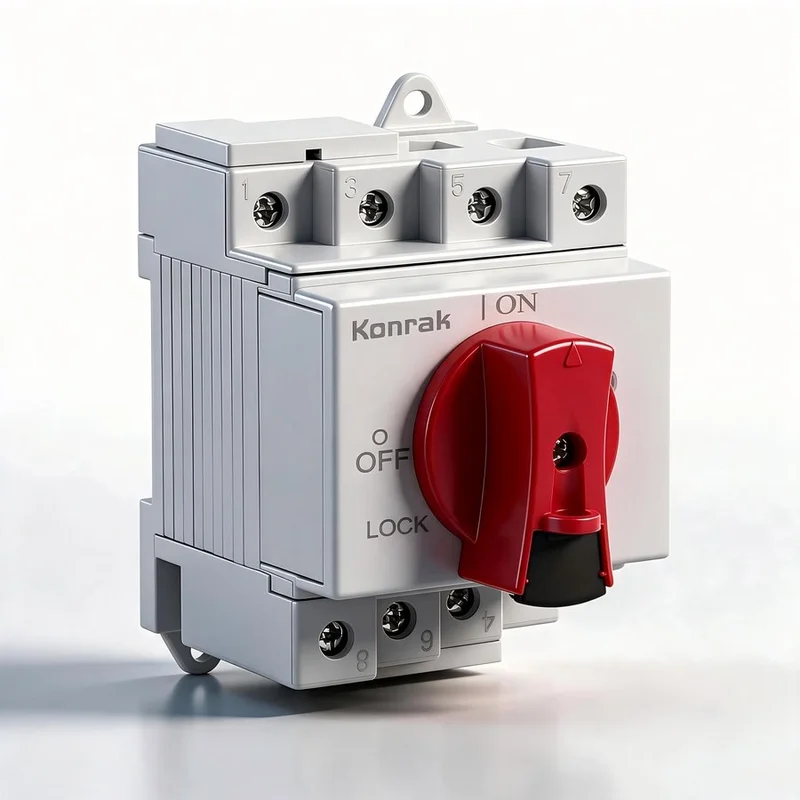
The isolation point of a DC system
A DC switch-disconnector is placed between the source of DC energy and the distribution or the load, so that the circuit can be made dead and locked off before any work begins.
How to specify the RKD
The code reads left to right: current, mounting, knob and poles. It follows the same convention throughout the Konrak DC range.
| Position | Meaning | Options | Example |
|---|---|---|---|
| RKD32 | Series and rated thermal current (Ith) | RKD32 = 32 A | RKD32 |
| Mounting | How the switch is fixed | R = rear panel · D = 35 mm DIN-rail · B = door interlock · E = sealed enclosure | E |
| Knob | Handle type | P = padlockable · U = plain (non-lockable) | P |
| Poles | Number of poles | 2 · 4 | 4 |
RKD32-EP4 = 32 A · sealed enclosure · padlockable handle · 4-pole
2-pole
One DC circuit — both conductors of a single string or feeder on one handle.
4-pole
Two circuits on one handle, or separate positive and negative routing.
Enclosed (E)
A complete sealed unit with the handle on the cover — ready to mount.
Padlockable (P)
The red handle can be locked in the 0 (OFF) position with a padlock.
Panel mounting
Rear-panel version for mounting through a panel or enclosure door.
DIN-rail mounting
35 mm DIN-rail version for fitting inside cabinets and DC distribution boxes.
Door interlock
The enclosure door cannot be opened while the switch is ON.
32 A DC duty
A high thermal current for a compact switch-disconnector.
Clear indication
ON / OFF positions are clearly marked on the front, with a dedicated LOCK position.
Sealed construction
The enclosed version protects the mechanism against dust and water.
What the RKD can switch
The utilisation category tells you which loads the switch has been designed and tested to break. The RKD covers the industrial DC categories as well as the photovoltaic ones.
| Utilisation category | Nature of the load | Typical application |
|---|---|---|
| DC-21B | Resistive DC loads, including moderate overloads (infrequent operation) | DC heating, lighting and resistive DC circuits |
| DC-22B | Mixed resistive and inductive DC loads, including moderate overloads (infrequent operation) | Shunt-wound DC motors, DC drive and control circuits |
| DC-PV1 | Switching of photovoltaic DC circuits — basic case | PV string and array isolation |
| DC-PV2 | Switching of photovoltaic DC circuits — more severe case | PV string and array isolation where the current may be critical |
The letter suffix denotes the frequency of operation: A = frequent operation, B = infrequent operation. A maintenance isolator such as the RKD is an infrequent-operation device, hence DC-21B and DC-22B. The same device is also rated for the photovoltaic categories DC-PV1 and DC-PV2.
RKD technical data
| Function | DC switch-disconnector — manual load-break isolation with an isolating gap |
| Rated thermal current (Ith) | 32 A |
| Rated operational voltage (Ue) | up to 1000 V DC |
| Utilisation categories | DC-21B · DC-22B · DC-PV1 / DC-PV2 |
| Poles | 2 · 4 |
| Polarity | Non-polarised — either polarity may be connected |
| Handle | Red rotary handle with black grip; padlockable in OFF (P versions) |
| Terminals | Screw terminals, up to 16 mm² |
| Terminal tightening torque | 1.2 – 1.8 N·m |
| Mechanical life | >= 10,000 operations |
| Enclosure | Flame-retardant thermoplastic housing, grey |
| Degree of protection | IP66 (sealed enclosure version) |
| Mounting | Rear panel · 35 mm DIN-rail · door interlock · sealed enclosure |
| Standards | IEC/EN 60947-3 · GB/T 14048.3 |
| Marking | CE |
Values shown are typical for this series — please confirm against the current datasheet and drawing for the exact variant required.
Why the RKD
Made for DC, not adapted from AC
A DC arc does not pass through zero twice per cycle, so it will not self-extinguish. The RKD uses a DC-rated breaking construction to clear the arc safely.
Industrial DC categories
Rated DC-21B and DC-22B, so it suits resistive DC circuits and mixed inductive loads such as shunt-wound DC motors — not only photovoltaic systems.
PV rated as well
The same device is rated for the photovoltaic categories DC-PV1 and DC-PV2, so one part number covers PV, battery and general DC duty.
Non-polarised terminals
Either polarity may be connected to either side of each pole — simpler wiring and fewer site errors.
Lockable in OFF
The red handle can be padlocked in the 0 (OFF) position for lock-out / tag-out, and the LOCK position is marked on the cover.
Enclosed and ready to mount
The enclosed version is a complete switch in a sealed housing, with the handle and ON / OFF indication on the cover.
2-pole and 4-pole
One handle isolates one circuit or two, keeping panels tidy and reducing the number of components.
Four mounting styles
Rear panel, 35 mm DIN-rail, door interlock or sealed enclosure — the same switch fits the panel or the field.
Visible, reliable indication
The handle position and the ON / OFF marks give a clear, visible indication of the contact state.
Compact and robust
A small footprint with a rugged mechanism for industrial cabinets and DC distribution boxes.
Where the RKD is used
Wherever there is DC current that has to be isolated safely — from a battery cabinet in a data centre to a DC drive in a steel plant — a lockable DC switch-disconnector belongs at the head of the circuit. These are the applications the RKD is built for.
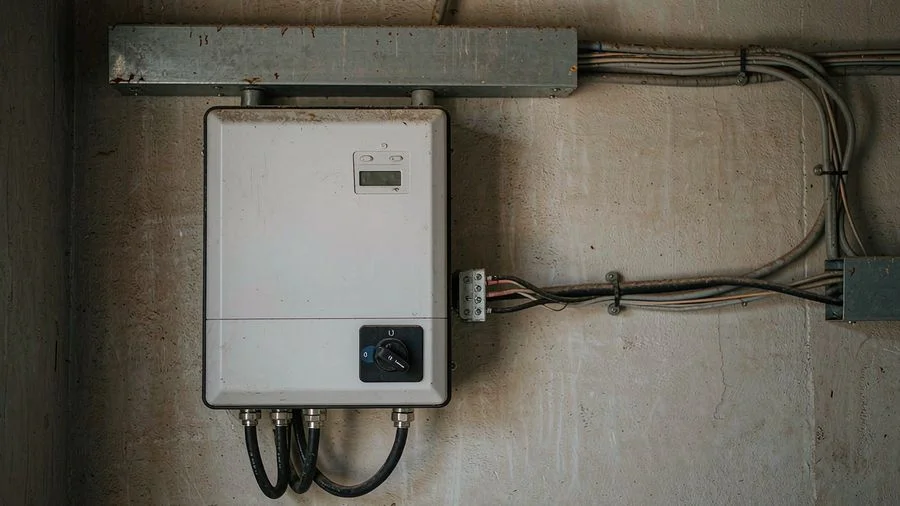
Inverters and combiner boxes
On the DC input of inverters, and inside DC combiner boxes, where an industrial DC isolating duty is called for.

Residential and rooftop PV
String isolation at the array and at the inverter — a lockable point before any work on the DC side.
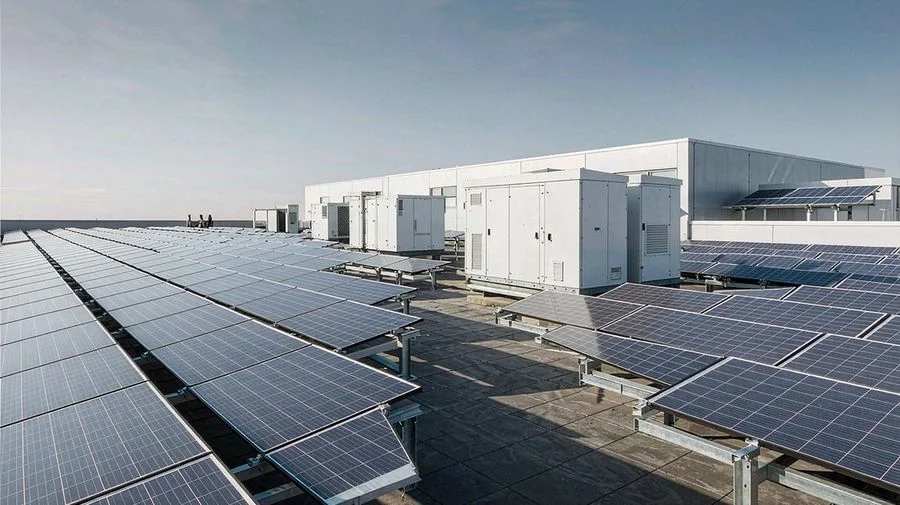
Utility and commercial PV
Array and sub-array isolation in ground-mounted and large rooftop plants.
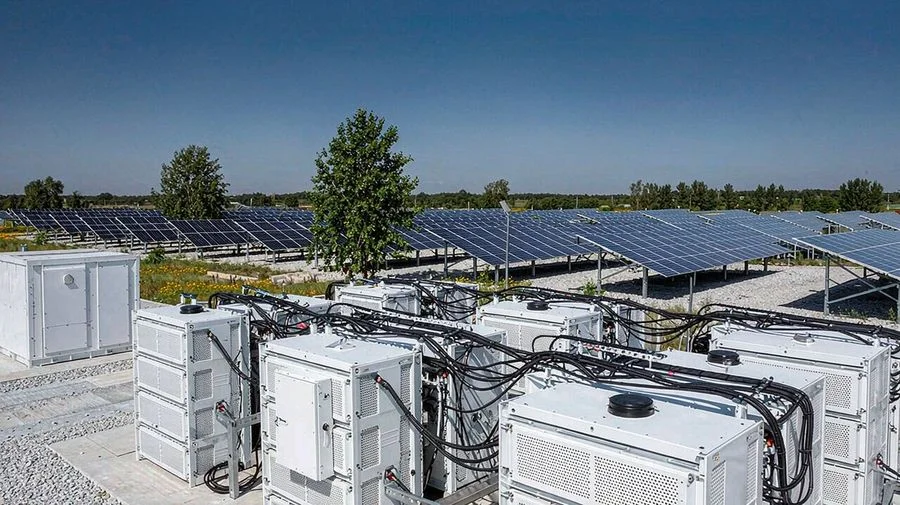
Battery energy storage
Maintenance isolation of battery clusters, battery cabinets and the DC bus in storage systems.
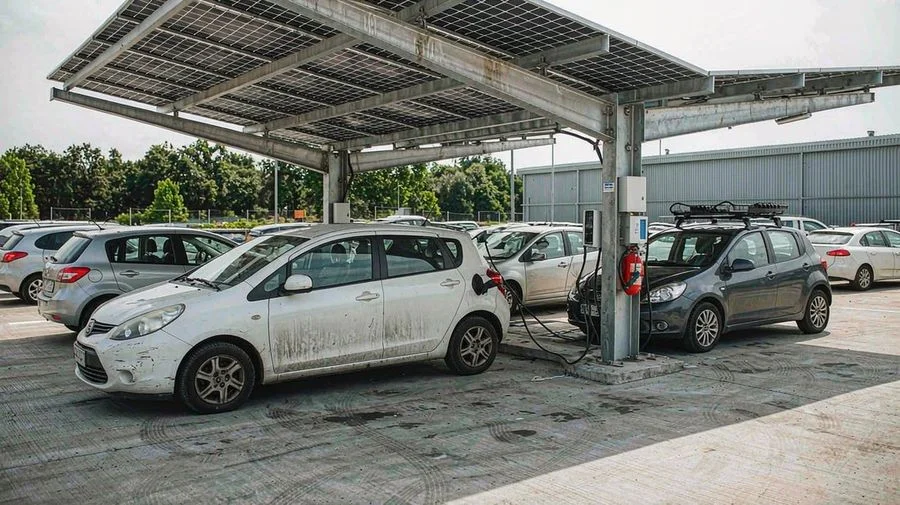
EV DC fast charging
Isolation of the main DC circuit inside fast-charging cabinets and charging posts.
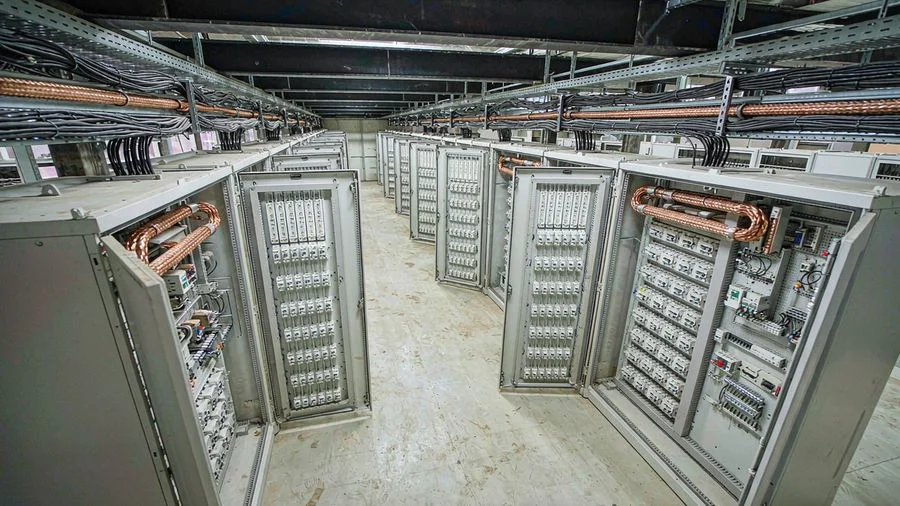
Telecom and data centres
48 V DC and HVDC power systems: rectifier, battery and DC distribution isolation.

DC drives and motor control
DC-22B switching for shunt-wound DC motors and drive cabinets in industry.

Marine and offshore
Shipboard and offshore DC systems, where a compact, lockable isolator is needed.
Solar PV
String, array and combiner-box isolation in photovoltaic plants.
Battery energy storage
Battery cluster, cabinet and DC-bus maintenance isolation.
EV DC fast charging
Main DC circuit isolation in charging cabinets and posts.
Telecom and data centres
48 V DC and HVDC power plants, rectifiers and battery distribution.
DC drives and motors
DC-22B duty for shunt-wound DC motors and drive circuits.
UPS and DC power supplies
Battery and DC link isolation in UPS and rectifier systems.
DC microgrids
Islandable DC distribution for buildings, campuses and industry.
Rail and traction
Auxiliary DC supplies and grounding switches.
Marine and offshore
Shipboard, offshore and port DC systems.
Cranes, hoists and handling
DC hoist and travel control isolation.
Electroplating and electrolysis
Rectifier DC output isolation in process plants.
DC distribution and control panels
Load-break isolation of DC feeders in cabinets and panels.
Application photographs are illustrative and show typical installations; they do not depict a specific project.
Frequently asked questions
What is a DC switch-disconnector?
A mechanical device that can make, carry and break DC current under normal load and, in the open position, provides an isolating gap. It is the manual load-break isolation device of a DC circuit.
What do DC-21B and DC-22B mean?
They are utilisation categories from IEC/EN 60947-3. DC-21 covers switching resistive DC loads with moderate overloads; DC-22 covers mixed resistive and inductive DC loads, such as shunt-wound DC motors. The B suffix denotes infrequent operation, which is what a maintenance isolator is used for.
Does the RKD work on photovoltaic systems too?
Yes. As well as the industrial DC categories, the RKD is rated for the photovoltaic categories DC-PV1 and DC-PV2, so it can be used in PV and storage systems as well as general DC circuits.
Is the RKD polarised?
No. The terminals are non-polarised, so either polarity may be connected to either side of each pole.
Can it be locked in the OFF position?
Yes. The P versions have a padlockable handle; the OFF position and the LOCK facility are clearly marked on the cover.
What is the difference from a DC circuit-breaker?
A DC circuit-breaker protects the circuit against overcurrent. The RKD is a manual switch-disconnector: it makes and breaks the load current and provides a visible, lockable isolation point. In most DC systems the two are used together.
How is the RKD mounted?
Four ways: rear panel, 35 mm DIN-rail, door interlock, or as a complete sealed enclosure.
Which standards apply?
IEC/EN 60947-3 and GB/T 14048.3, with utilisation categories DC-21B, DC-22B and DC-PV1 / DC-PV2, marked CE.
Need the right DC switch-disconnector?
Tell us the DC system voltage, the load current, the number of poles and how you want to mount the switch — our team will confirm the exact RKD code and can supply samples or OEM versions.
Request a Quote Download Datasheet (PDF)